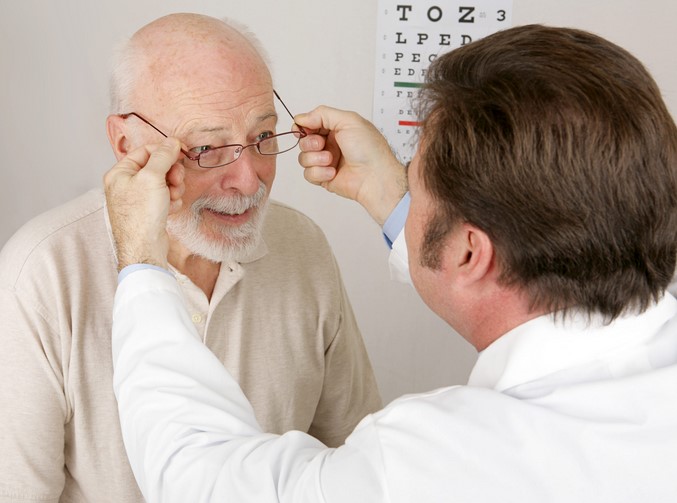
You’re sitting in your favorite armchair, trying to read the morning news or a text from your grandchild, and suddenly you realize you’re holding your phone at arm’s length just to make the letters stop dancing. Or perhaps you’ve noticed that driving at night feels like navigating through a smudge of Vaseline. It’s a frustrating, silent shift that millions of us face. In fact, by age 65, one in three Americans has some form of vision-impairing eye disease.
In my twelve years as a health writer, I’ve sat in on countless ophthalmology consultations and spoken with researchers dedicated to the biology of sight. I remember an early interview with a veteran surgeon who told me, “We treat our eyes like lightbulbs—we expect them to shine forever without checking the wiring.”
That conversation changed how I view eye health for aging adults. We often accept fading vision as an inevitable tax on aging, but much of that “tax” is actually preventable. Your eyes are delicate biological cameras, and like any high-end equipment, they require specific maintenance as the years stack up.
The “Biological Camera” Analogy: Understanding the Aging Eye
To understand vision loss, think of your eye as a high-end digital camera.
-
The Lens: In your youth, the lens is flexible, like a piece of clear gelatin that changes shape to focus. As we age, it becomes like a piece of hardened plastic (this is why we get presbyopia, or the need for reading glasses).
-
The Film: The retina at the back acts as the film. If the “film” gets damaged by light or poor circulation, the camera can’t capture a clear image, no matter how good the lens is.
-
The Plumbing: Your eye has a constant flow of fluid. If the “drain” gets clogged, pressure builds up—that’s exactly how Glaucoma starts.
Our goal with eye health for aging adults is to keep the lens clear, the film protected, and the plumbing flowing.
The “Big Four” Threats to Your Vision
When I look at clinical data, four specific conditions dominate the landscape of aging eyes. Recognizing these early is the difference between minor correction and major loss.
1. Age-Related Macular Degeneration (AMD)
AMD affects the macula, the part of your eye responsible for sharp, central vision. Imagine trying to look at someone’s face and seeing only a blurred gray spot in the middle, while the edges remain clear.
-
The Insight: AMD is often linked to oxidative stress. Think of it as “rusting” of the retinal cells.
2. Cataracts
A cataract is a clouding of the eye’s natural lens. I’ve heard patients describe it as looking through a frosty or fogged-up window.
-
The Good News: This is one of the most successful surgeries in modern medicine. We literally replace your old, “foggy” lens with a brand-new, clear artificial one.
3. Glaucoma: The Silent Thief
This is the one I worry about most. Glaucoma often has no symptoms until your peripheral vision is already gone. It’s caused by high intraocular pressure damaging the optic nerve.
4. Diabetic Retinopathy
If you are managing blood sugar issues, your eyes are on the front lines. High glucose levels can damage the tiny blood vessels in the retina, leading to leakage and scarring.
Pro-Active Strategies: Protecting Your Sight Daily
Maintaining eye health for aging adults isn’t just about going to the doctor once a year. It’s about the small, repetitive choices you make every day.
The Power of the Plate
Your eyes are incredibly “hungry” for specific nutrients. Research, specifically the AREDS2 study, has shown that certain antioxidants act like a shield for your macula.
-
Lutein and Zeaxanthin: Found in dark leafy greens (kale, spinach). Think of these as “internal sunglasses” that filter harmful blue light.
-
Omega-3 Fatty Acids: Essential for the oily layer of your tear film. If you suffer from Dry Eye Syndrome, increasing your intake of salmon or flaxseeds can be a game-changer.
Lighting and Ergonomics
I’ve observed that many seniors struggle with vision simply because their environment is poorly lit. As we age, our pupils shrink and become less responsive.
-
Tip: Use task lighting. Instead of one bright ceiling light that creates glare, use directed lamps for reading or sewing.
Expert Advice: Insights from the Field
-
Tips Pro: The “Amsler Grid” Trick. You don’t need fancy equipment to monitor your central vision. Pin a grid of straight lines (an Amsler Grid) on your fridge. Look at it once a week. If the straight lines start to look wavy or distorted, call your eye doctor immediately. This is often the first sign of “Wet” AMD.
-
(The Hidden Warning): Be careful with “Blue Light Glasses” sold online. While they are trendy, many ophthalmologists I’ve interviewed emphasize that UV protection is far more critical for aging eyes. Ensure your sunglasses are labeled UV400 or “100% UV Protection.” UV damage is cumulative—it’s the primary driver of cataract formation.
Scannable Checklist: Your Eye Health Roadmap
To stay on top of eye health for aging adults, follow this scannable protocol:
-
Comprehensive Dilated Eye Exams: Do not settle for a simple “which is better, 1 or 2” vision test. A dilated exam allows the doctor to see the back of the eye and catch Glaucoma or AMD before you notice symptoms.
-
The 20-20-20 Rule: If you use a computer or tablet, every 20 minutes, look at something 20 feet away for 20 seconds. This prevents “accommodative spasm” or eye strain.
-
Know Your Family History: Many eye diseases are hereditary. If your mother had Glaucoma, you are at a much higher risk.
-
Quit Smoking: I cannot stress this enough. Smoking is as bad for your eyes as it is for your lungs. It doubles your risk of developing AMD.
-
Manage Systemic Health: High blood pressure and high cholesterol directly impact the vascular health of your eyes.
The Role of Technology in Vision Support
We live in an era where technology can actually help those with low vision. From “smart” magnifying glasses to apps that read text aloud, “low vision” doesn’t have to mean “low independence.” If you’re struggling, ask your doctor for a referral to a Low Vision Specialist. They focus on maximizing the sight you do have rather than just measuring what you’ve lost.
Conclusion: Don’t Take the View for Granted
Our eyes are our primary connection to the world—to the faces of our loved ones, the beauty of a sunset, and the independence of driving. Protecting eye health for aging adults is about more than just seeing clearly; it’s about maintaining your quality of life.
I’ve seen patients in their 80s with the “vision of a hawk” simply because they were diligent about UV protection, nutrition, and early screenings. You only get one pair of eyes. Treat them with the respect they deserve, and they will continue to show you the beauty of the world for years to come.
When was the last time you had a full, dilated eye exam? Have you noticed any subtle changes in how you see colors or how you drive at night? Let’s talk about your experiences or questions in the comments below!