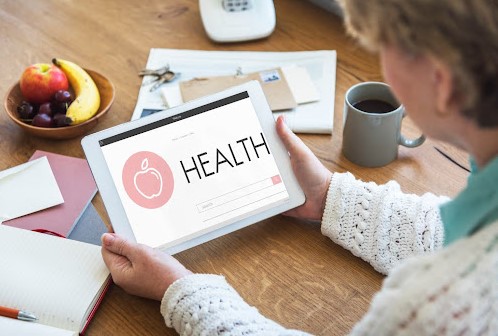
An elderly woman sits at her kitchen table, staring blankly at a white plastic bottle. The label reads: Take one tablet twice daily. It sounds simple enough. But she takes her first dose at 8:00 AM, and her second dose at 10:00 AM because to her, “twice daily” just meant two times during her morning routine. Within forty-eight hours, she is rushed to the emergency room with severe drug toxicity.
Scenes like this unfold in hospitals and clinics every single day. Over my ten years working on the frontlines of public health and community wellness, I have witnessed a harsh truth that rarely makes it into shiny medical brochures: the greatest barrier to modern medicine isn’t a lack of advanced treatments—it is a lack of understanding. Studies consistently show that nearly 9 out of 10 adults struggle with complex health information, leaving them vulnerable to preventable medical errors.
When we talk about health literacy programs, we aren’t talking about teaching people how to become doctors. We are talking about giving everyday people the tools to navigate a complex, often intimidating system. Let’s explore how these programs work, why they are radically changing community health outcomes, and how we can bridge the gap between medical jargon and everyday life.
The Jargon Barrier: Why the Healthcare System is a Foreign Country
To understand why community health education is failing without intervention, we have to look at the psychological weight of entering a medical facility.
The Foreign Language Analogi
Imagine being dropped off in the middle of a bustling city in a foreign country where you don’t speak the language. The street signs are written in an alphabet you can’t read, the locals are rushing past you speaking rapid slang, and you are trying to find a train station before night falls. You would feel anxious, disoriented, and paralyzed by the fear of making a wrong turn.
For a beginner or intermediate patient, entering a hospital feels exactly like that. Medical professionals naturally speak a language called “Medes”—a dialect heavy with terms like hypertension, subcutaneous, prophylactic, and chronic.
The Cost of Confusion
When a patient is anxious about a diagnosis, their cognitive processing power drops significantly. If a physician explains a treatment plan using dense clinical terms, the patient will often nod along out of politeness or embarrassment, leave the clinic, and immediately mismanage their condition.
This breakdown in communication leads to missed appointments, medication non-adherence, unnecessary readmissions, and skyrocketing medical bills.
The Core Pillars of Effective Health Literacy Programs
True community education goes far beyond handing out a black-and-white photocopy of a pamphlet. High-impact health literacy programs are designed around three foundational, human-centric pillars.
1. The Teach-Back Method (Closing the Communication Loop)
One of the most powerful insights I have implemented in field workshops is moving away from asking the passive question: “Do you have any questions?” The universal response to that question is almost always a quiet “No,” even if the patient is entirely confused.
-
The Action: Train community educators and patients to use the Teach-Back Method.
-
The Execution: A provider might say, “I want to make sure I explained your insulin routine clearly. Can you show or tell me in your own words how you will take this medicine tomorrow morning?”
-
The Impact: This shifts the burden of clarity back onto the educator and catches misunderstandings instantly before the patient leaves the room.
2. Simplifying Visual and Written Material
Traditional patient education forms are frequently written at a college reading level, loaded with passive voice and small fonts. Modern programs actively redesign these materials. They champion the use of plain language (targeting a 5th to 6th-grade reading level), clear headers, and intuitive icons to make instructions instantly scannable on any screen or paper.
3. Navigational Literacy
Healthcare systems are bureaucratic labyrinths. Programs now focus heavily on teaching communities how to read insurance policies, understand copays, navigate digital patient portals, and know when to visit a primary care doctor versus utilizing the emergency department.
Quantifying the Impact: Cultivating Community Autonomy
When a community benefits from structured health education, the systemic shifts are profound. It moves the needle from reactive crisis management to proactive prevention.
+------------------------+---------------------------------------+---------------------------------------+
| Educational Focus      | Traditional Community Response        | Post-Health Literacy Program Response |
+------------------------+---------------------------------------+---------------------------------------+
| Chronic Disease Management| Waiting for an acute crisis (e.g.,    | Tracking daily blood sugar/pressure;  |
|                        | diabetic ketoacidosis) to seek help.   | identifying early red flags early.    |
+------------------------+---------------------------------------+---------------------------------------+
| Medication Adherence   | Stopping antibiotics early when       | Completing full prescriptions;        |
|                        | symptoms fade; skipping doses.        | managing side effects safely.         |
+------------------------+---------------------------------------+---------------------------------------+
| Preventative Screening | Avoiding screenings due to fear or    | Booking routine mammograms, paps,     |
|                        | lack of awareness.                    | and colonoscopies confidently.        |
+------------------------+---------------------------------------+---------------------------------------+
By empowering individuals with health literacy programs, we see a drastic reduction in health disparities. It levels the playing field for vulnerable, low-income, or immigrant populations who have historically been left behind by traditional medical communication.
Expert Advice and Hidden Warnings
Developing and participating in community outreach has taught me that good intentions can sometimes backfire if we aren’t culturally aware.
💡 Pro Tip: Champion “Ask Me 3”: If you want to advocate for your own health or help a family member, use the Ask Me 3 framework during every medical appointment. Force the provider to clearly answer these three questions:
What is my main problem?
What do I need to do?
Why is it important for me to do this?
Writing down the answers to these three specific prompts cuts through 90% of clinical noise.
⚠️ Beware of the Digital Divide: In our rush to move everything to digital patient portals, health apps, and telehealth platforms, we are creating a dangerous new form of illiteracy: digital health exclusion. Many low-income individuals or elderly patients do not have reliable high-speed internet, smartphones, or the digital skills to navigate complex online systems. When launching or supporting community programs, always ensure there is a robust, paper-based, or face-to-face alternative available.
How to Build a Health-Literate Community: A Step-by-Step Action Plan
Whether you are a local community leader, a healthcare professional, or an individual wanting to uplift your neighborhood, here is a practical roadmap to get started:
-
Step 1: Identify Trusted Messengers: People do not learn from institutions they do not trust. Partner with local faith leaders, community centers, barbershops, or libraries to host your educational workshops.
-
Step 2: Strip Away the Medical Jargon: Audit all shared materials. Replace words like edema with swelling, analgesic with pain reliever, and adverse effect with side effect.
-
Step 3: Focus on Action, Not Anatomy: A patient with type 2 diabetes does not necessarily need a 45-minute lecture on pancreatic histology. They need to know exactly how to read a nutrition label, how to check their blood sugar, and how to care for their feet. Keep the education highly practical.
-
Step 4: Normalize Question-Asking: Build an environment where saying “I don’t understand” is praised, not stigmatized. Eliminate the shame often associated with low literacy.
The Ultimate Prescription is Empowerment
Health is more than the absence of disease; it is the presence of power—the power to make informed, confident choices about your own body and your family’s future. We can build the most advanced hospitals in the world, but if our communities do not understand how to access them or apply medical advice at home, those structures are nothing more than expensive monuments.
Investing in health literacy programs is an investment in human dignity. When we teach communities how to navigate healthcare, we aren’t just passing along facts; we are saving lives, preventing crises, and building a more resilient society from the ground up.
Have you ever left a doctor’s office feeling completely overwhelmed by medical jargon? What is one medical term or insurance concept that always confuses you? Let’s talk about it in the comments below—your question might help someone else break through their own confusion!

 Every year, like clockwork, the office “bug” makes its rounds. You watch colleagues drop one by one, coughing, sneezing, and burning through their sick days. You stock up on vitamin C supplements, chug orange juice, and douse your hands in sanitizer, praying your defenses hold up. But what if the most powerful shield against that seasonal flu wasn’t sitting in your medicine cabinet, but waiting in your gym sneakers?
 It is 3:15 AM. While most of the world is locked in deep, restorative slumber, you are staring at a computer screen, driving a truck down a lonely highway, or monitoring a patient’s vitals. Your eyes burn, your focus wavers, and that third cup of coffee is doing nothing but making your heart race.